




The content moderation platform that orchestrates your full T&S lifecycle in one system. Reduce content moderation costs by 35% with Nima - through unified tools, AI automation, low engineering effort, and built-in business intelligence.
Want to see how this could work for your platform? Talk to our team.
Talk to us about your challengesThe appeals workflow alone justified the switch — we didn't have one before, and now it's just there, working, the day we went live.”
Downloading a transparency report from Nima — that's the dream. Weeks of legal work moved off our plate.”
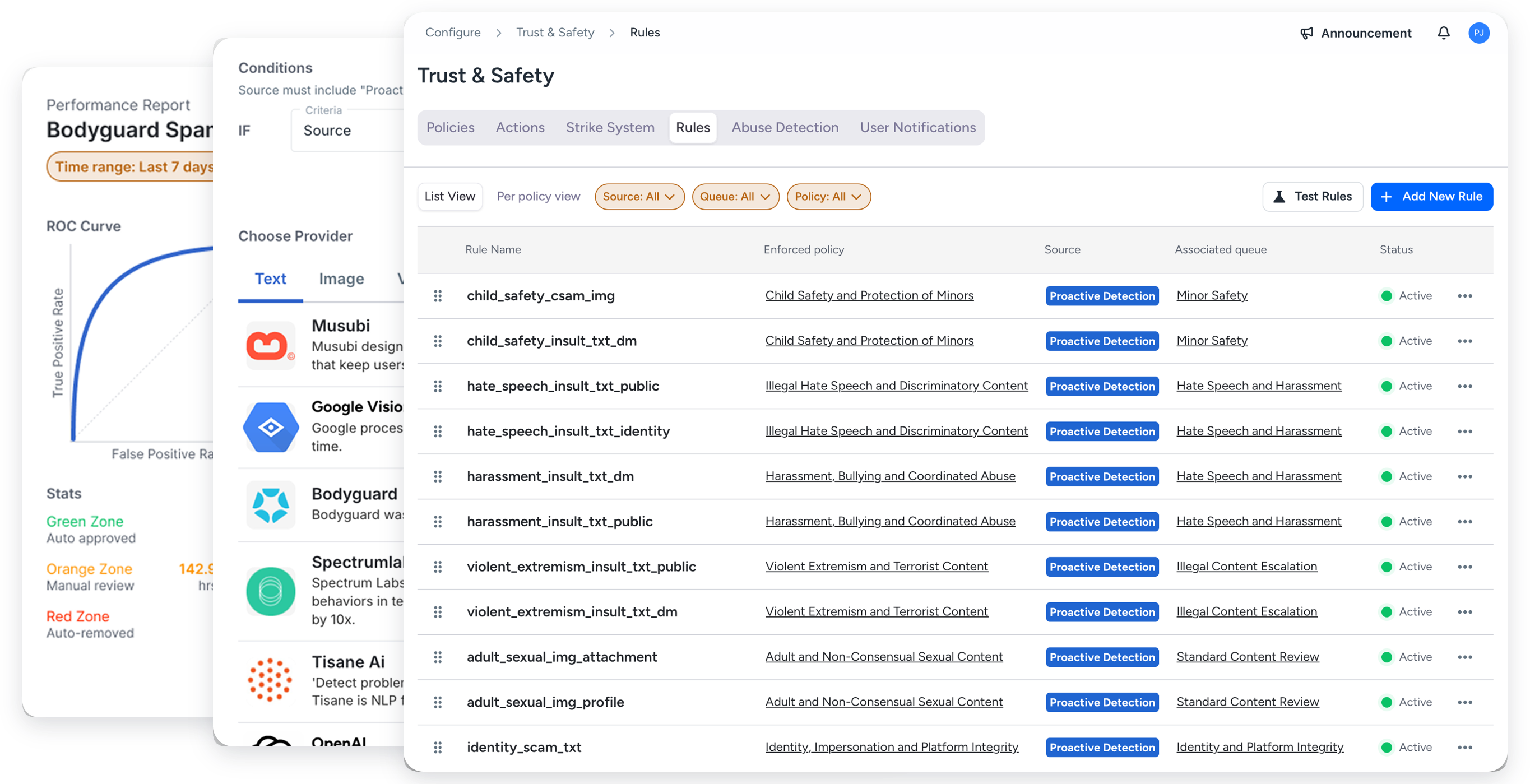
Everything your team needs to moderate at scale - AI detection, human review and compliance - in one place.
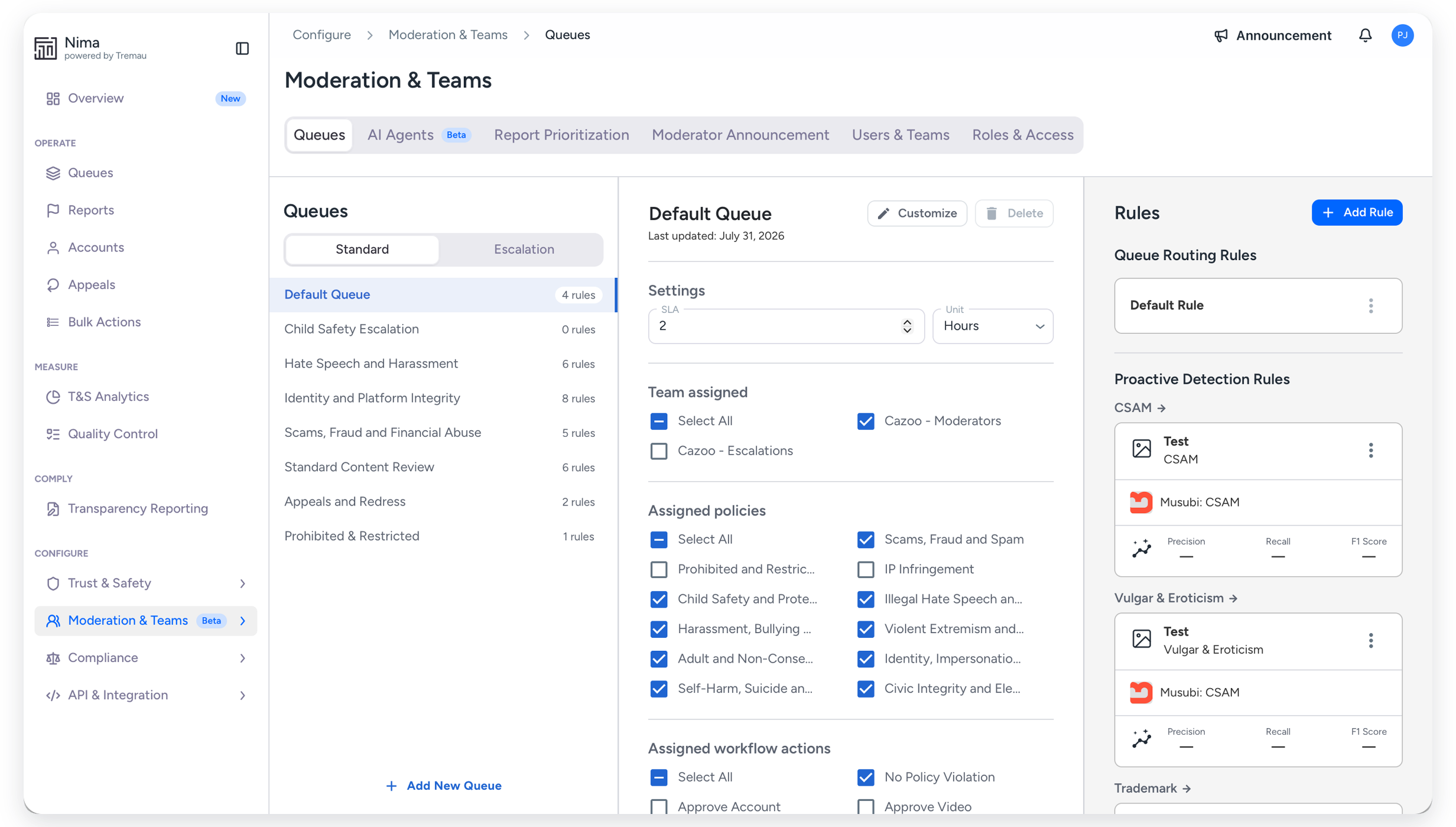
Cut the time your team spends on every case.
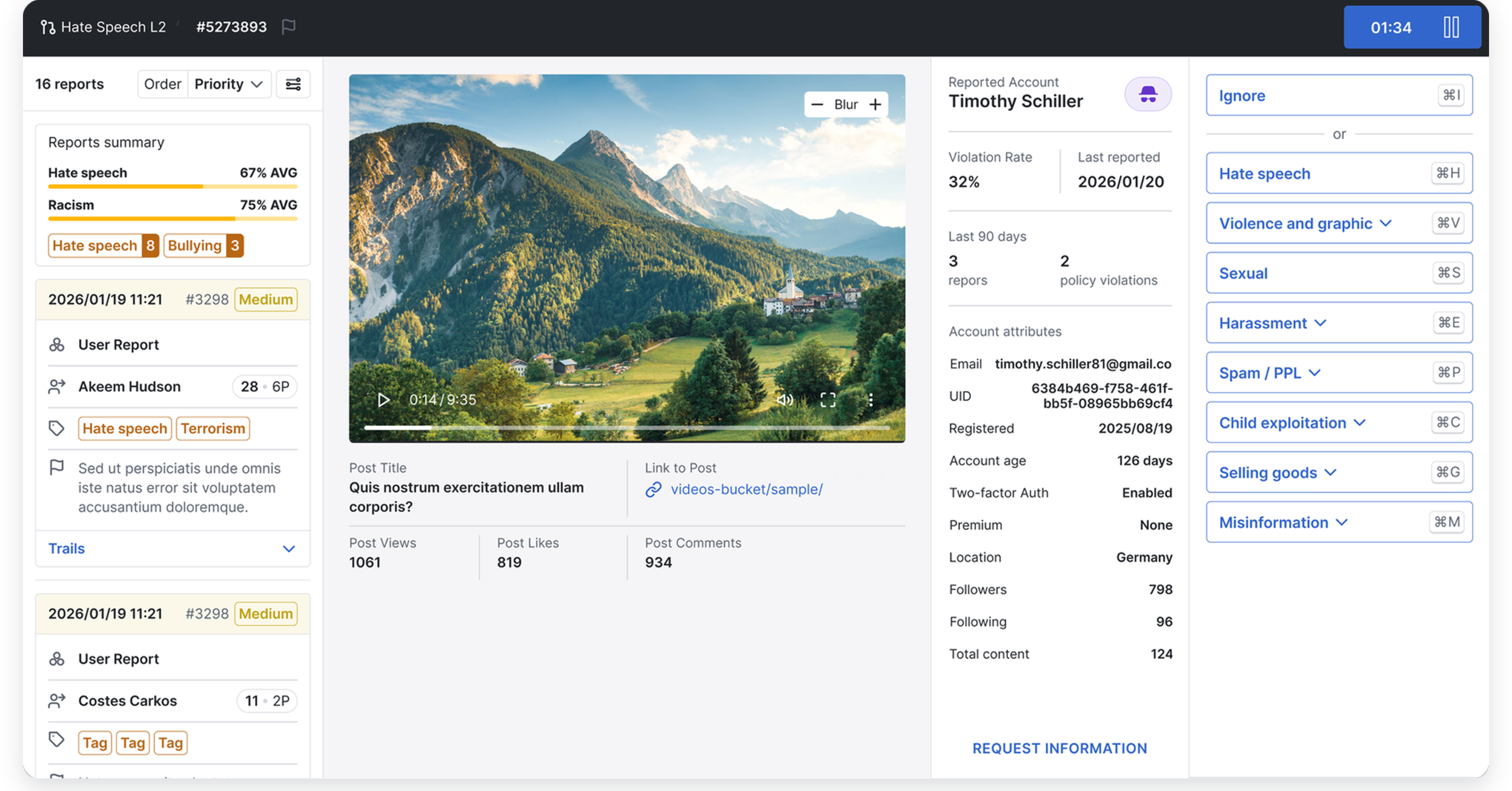
Keep every decision consistent and well-informed.
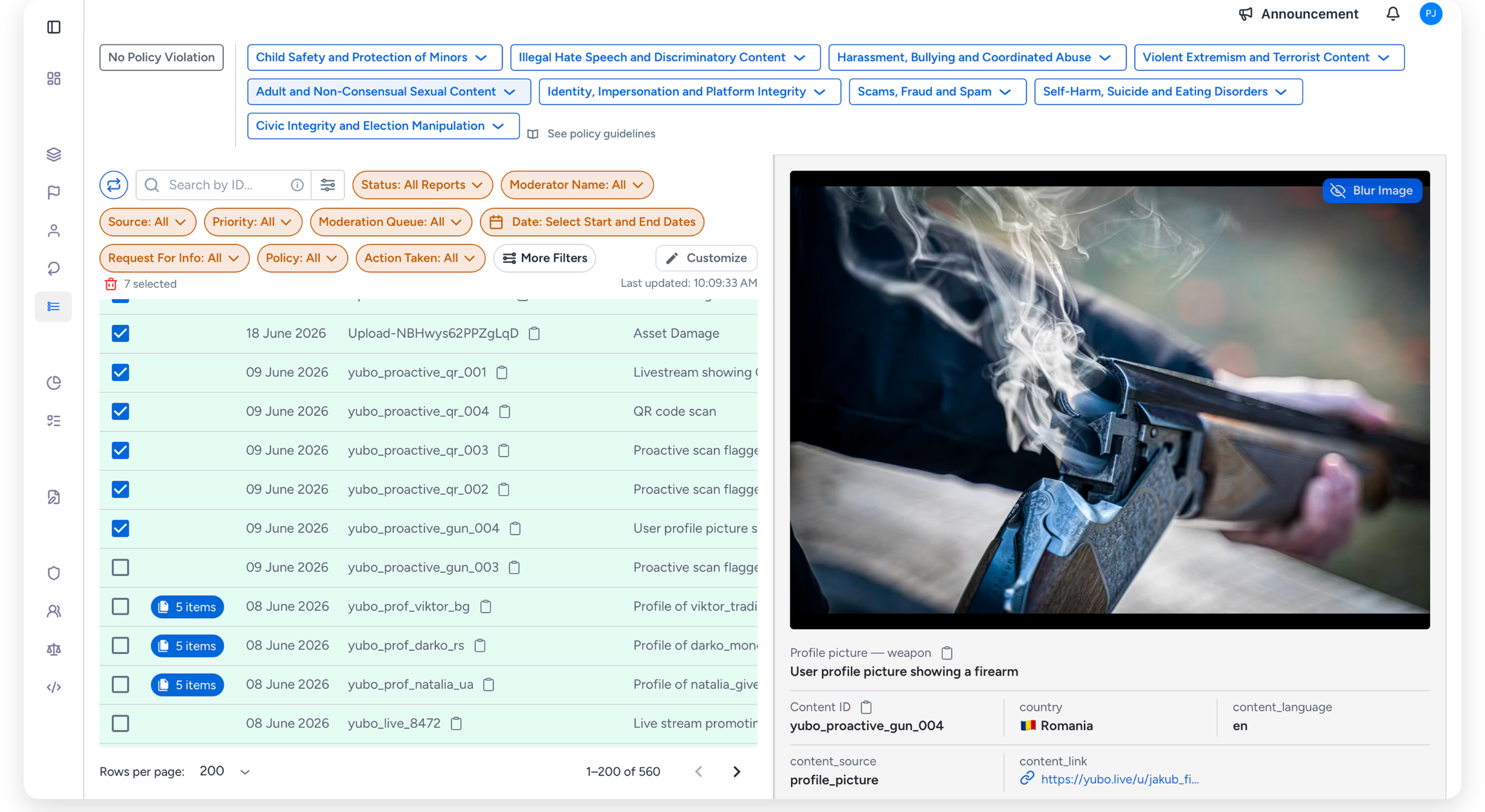
Handle more content without growing headcount.
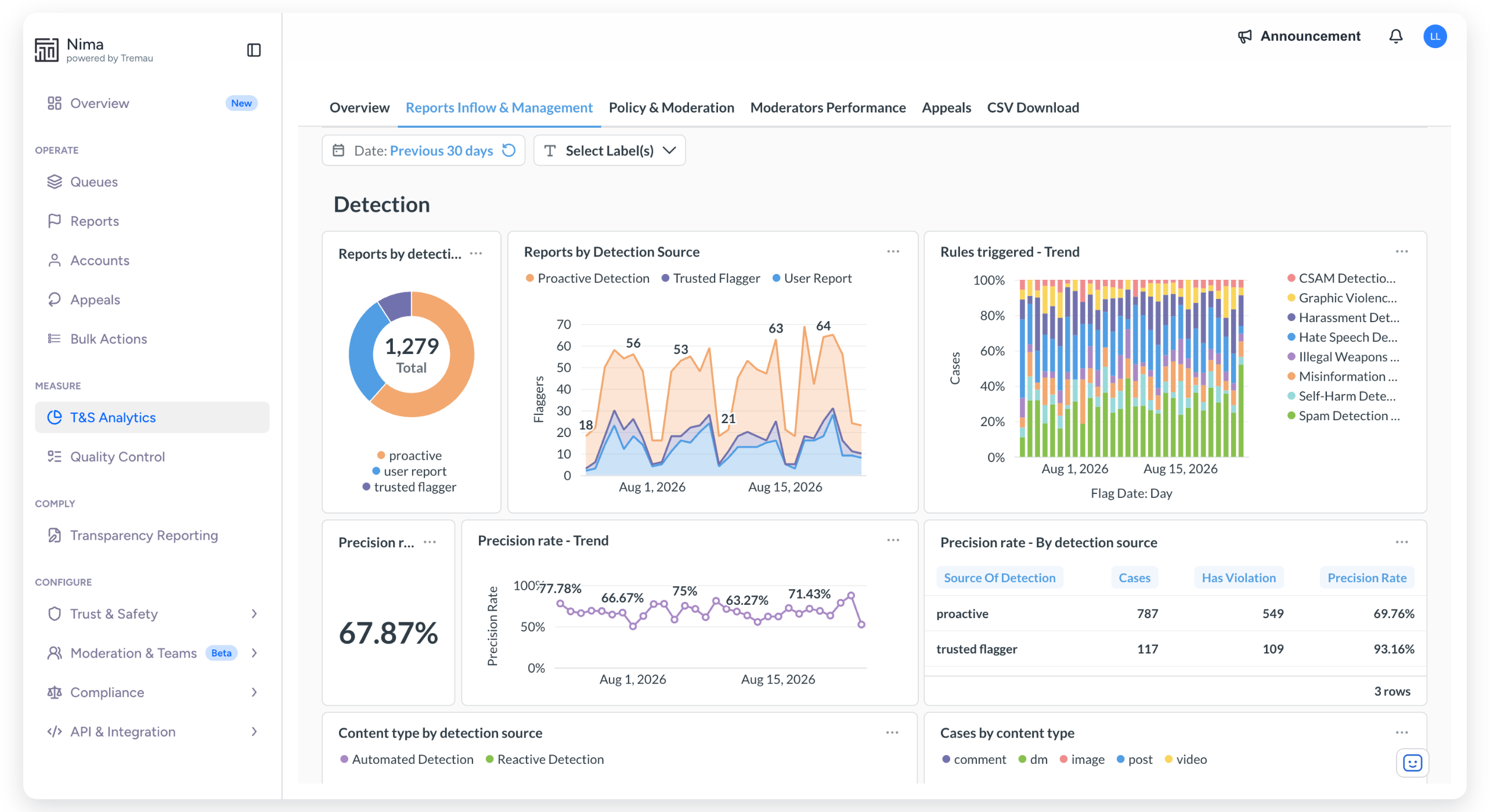
Monitor moderation performance across queues, rules and reviewers.
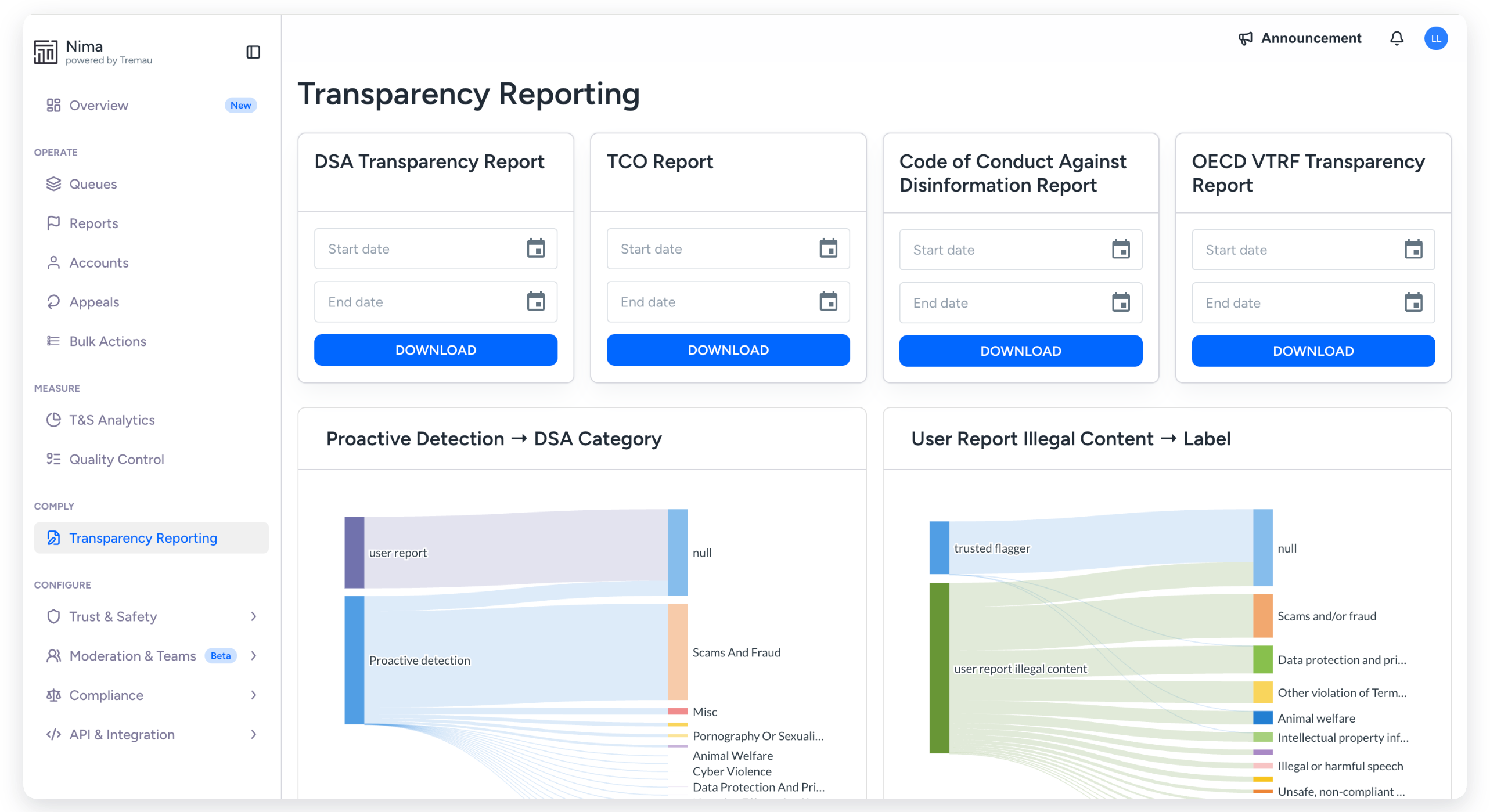
DSA, UK and Australian Online Safety Act compliance - built by ex-regulators.
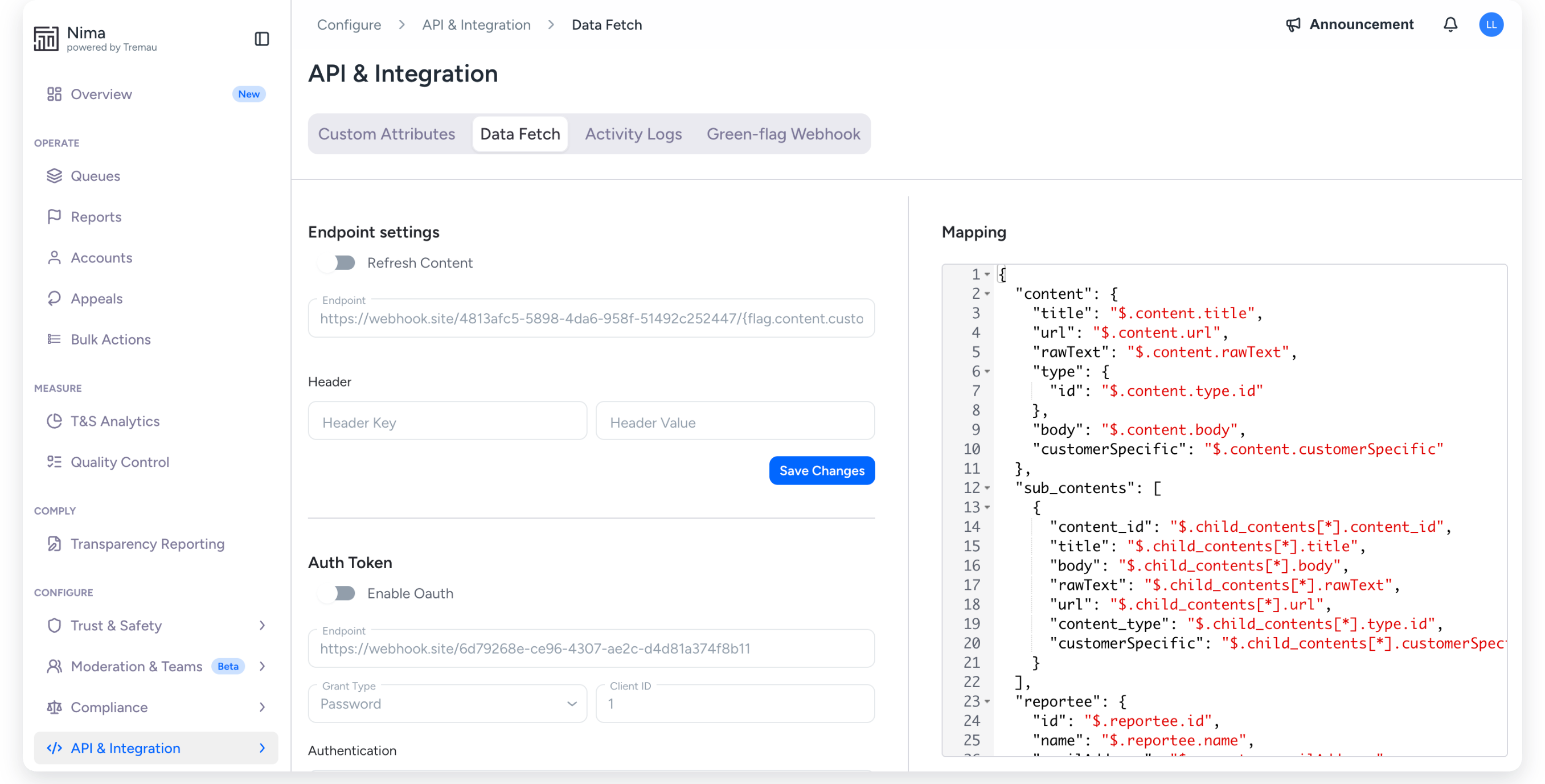
Integrate through one unified API and configure workflows to your needs. Timelines depend on your integration and setup.
A $3B game studio with 700+ employees was running fragmented, ad-hoc moderation workflows per title - with no unified enforcement logic, inconsistent policies, and no way to see T&S.
"For the first time, our teams can see and act on Trust & Safety issues across all our titles from a single platform."
- Head of Trust & Safety, Global Game StudioA $400M marketplace with 300+ employees was spending up to 15 minutes per report, operating across fragmented tools with zero real-time visibility. Nima changed all of that - in months, not years.
"Implementing Nima by Tremau was a critical step in restructuring our entire Trust & Safety operations."
- Head of Trust & Safety, Global MarketplaceTremau Advisory supports the full Trust & Safety lifecycle - spanning core T&S strategy and operations, regulatory risk and compliance, and intelligence-led benchmarking. Our expertise, reinforced by proprietary technology, helps clients navigate global regulations and their most pressing T&S challenges.
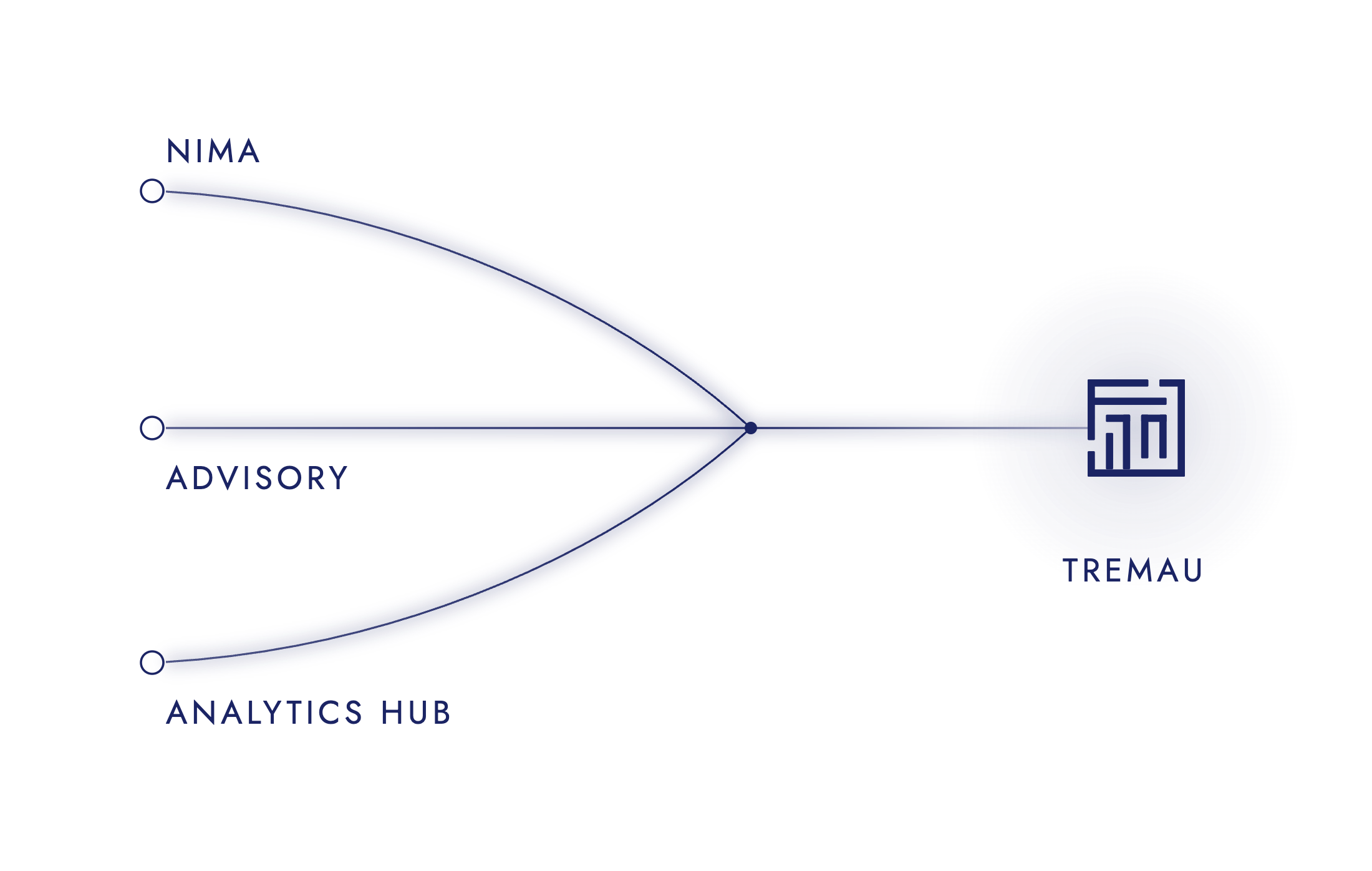
Talk to our advisorsNamed after Charles Pierre Trémaux, whose algorithm finds a path through any maze, Tremau helps online platforms navigate T&S: Nima runs T&S operations, Advisory shapes safety frameworks and navigates global regulation, the Analytics Hub analyses risks and trends. Together, we help platforms operate more safely and stay compliant.
Frequently asked questions
That makes sense and the good news is Nima complements your existing tools rather than replacing them. Most of our clients come to us with detection APIs or basic ticketing systems already in place.
The challenge we typically see is that having detection tools is only one piece of the puzzle. The real bottleneck is usually in the workflow layer: coordinating between AI and human review, managing escalations, generating compliant reports, and tracking everything for audit purposes.
Nima acts as the orchestration layer that connects everything you already have into a unified system. You keep using the detection APIs that work well for you, while Nima adds the scalability, workflow, compliance automation, and oversight that's missing while giving you access to the most advanced detection models.
For example, one of Tremau's clients was using Sightengine for visual detection and Bodyguard for text. They kept both integrations, Nima unified the review workflows and automated their DSA reporting. They reduced tool switching, engineering maintenance and manual reporting work: moderators no longer switch between tools, engineers no longer maintain separate legacy tooling, and legal no longer spends weeks on compliance reporting.
Nima was designed for global compliance from day one. Our platform supports:
The reason we can support all these is that Nima was built by ex-regulators who understood that platforms need a system flexible enough to adapt as regulations evolve. Rather than hardcoding specific rules, we built a policy engine that lets you define region-specific requirements while maintaining global oversight.
For example, our enterprise clients operate across 12 countries on 4 continents. They use Nima to enforce different policies based on user location while maintaining unified reporting for their legal team.
We're the only solution that combines Nima, the moderation platform, with strategic advisory from ex-regulators and T&S experts who've operated platforms at billion-user scale. When you work with Tremau, you get:
Our advisors have written regulatory guidance, testified before government bodies, and operated T&S at platforms you use every day. You're not just buying technology, you're getting their expertise embedded in both the platform and the ongoing advisory.
That's a conversation we have often, and internal builds can make sense in specific situations.
Building moderation infrastructure internally requires engineering resources for integrations, case management, policy enforcement, appeals, reporting, and ongoing maintenance - and because T&S infrastructure is business-critical, that maintenance never stops.
Nima provides configurable moderation infrastructure, so teams can focus more resources on their core product. It's subscription-based, and Tremau handles updates, security, and compliance changes.
That said, custom builds can make sense when you truly have requirements that no platform can meet.
Yes. Tremau has achieved SOC 2 Type II compliance, reinforcing the security controls behind Nima, our Trust & Safety platform. For teams handling sensitive moderation, enforcement, user-reporting, and compliance data, this provides added assurance that Nima is built with strong controls around data security, access management, availability, and operational integrity. Nima also supports secure SSO access, audit logs, and flexible deployment options, helping platforms scale moderation while keeping sensitive Trust & Safety data protected.
Nima supports DSA-related moderation workflows, including enforcement documentation, user notifications, appeals, and regulatory reporting. Configurable processes help platforms operationalise the compliance requirements that apply to them.
Users can be notified of decisions and appeal them, including through a self-serve Enforcement Portal, and appeals return to the moderation console with the original case context. Nima also generates structured DSA transparency report exports aligned with the official Annex I template, ready for your team to complete with the required qualitative information.
Yes. Connect AI detection providers through Nima's AI Marketplace and incorporate their detection results into configurable moderation workflows. You can also connect your own proprietary detection tools, and combine automated detection with human review to support consistent policy enforcement.